Appendix E: Bond Dissociation Energies for Some Organic Compounds

Table E1. Bond Dissociation Energies (D) in Kj/mol of Some Organic Compounds

Bond D (kJ/mol) Bond  D (kJ/mol) Bond D (kJ/mol)
H-H 436 (CH3)2CH-H 410 C2H5–CH3 370
H-F 570 (CH3)2CH-Cl 354 (CH3)2CH-CH3 369
H-Cl 431 (CH3)2CH-Br 299 (CH3)3C-CH3 363
H-Br 366 (CH3)3C-H 400 H2C=CH-CH3 426
H-I 298 (CH3)3C-Cl 352 H2C=CHCH2–CH3 318
Cl-Cl 242 (CH3)3C-Br 293 H2C=CH2 728
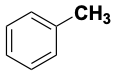
Br-Br 194 (CH3)3C-I 227 Chemical structure of toluene, consisting of a six-membered benzene ring with alternating double bonds and a methyl group (CH3) attached to one of the carbons. 427
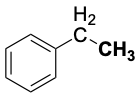
I-I 152 H2C=CH-H 464 Chemical structure of ethylbenzene, consisting of a six-membered benzene ring with alternating double bonds attached to an ethyl group (CH2CH3). 325
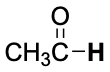
CH3–H 439 H2C=CH-Cl 396 Chemical structure of acetaldehyde, showing a central carbon atom double-bonded to an oxygen atom, single-bonded to a methyl group (CH3) on the left, and single-bonded to a hydrogen atom (H) on the right. 374
CH3–Cl 350 H2C=CHCH2–H 369 HO-H 497
CH3–Br 294 H2C=CHCH2–Cl 298 HO-OH 211
CH3–I 239 Chemical structure of benzene, depicted as a six-membered ring with alternating double bonds, explicitly showing a single bond extending from one carbon vertex to a hydrogen atom (H). 472 CH3O-H 440
CH3–OH 385 Chemical structure of chlorobenzene, consisting of a six-membered benzene ring with alternating double bonds and a chlorine atom (Cl) attached to one of the carbons. 400 CH3S-H 366
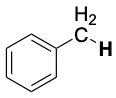
CH3–NH2 386 Chemical structure of toluene (methylbenzene), shown as a six-membered benzene ring attached to a methylene carbon (CH2) that explicitly links to a single hydrogen atom (H). 375 C2H5O-H 441
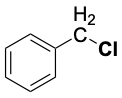
C2H5–H 421 Chemical structure of benzyl chloride, consisting of a six-membered benzene ring with alternating double bonds attached to a chloromethyl group (CH2Cl). 300 Chemical structure of acetone, showing a central carbon atom double-bonded to an oxygen atom, single-bonded to a methyl group (CH3) on the left, and single-bonded to a bolded methyl group (CH3) on the right. 352
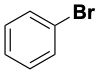
C2H5–Cl 352 Chemical structure of bromobenzene, consisting of a six-membered benzene ring with alternating double bonds and a bromine atom (Br) attached to one of the carbons. 336 CH3CH2O-CH3 355
C2H5–Br 293 . 464 NH2–H 450
C2H5–I 233 HC≡C-H 558 H-CN 528
C2H5-OH 391 CH3–CH3 377

License

Icon for the Creative Commons Attribution-NonCommercial-ShareAlike 4.0 International License

Fundamentals of Organic Chemistry Copyright © by Kirsten Kramer and Cassandra Lilly is licensed under a Creative Commons Attribution-NonCommercial-ShareAlike 4.0 International License, except where otherwise noted.